




North Shore Restorative & Implant Dentistry
Dental Implants: Will my replacement teeth look natural?
Many patients fear that when they lose teeth in adulthood their smiles will never look the same. Our implant dentist understands the negative effects that accompany tooth loss. From depression and social anxiety to impaired oral function, tooth loss has far-reaching effects. Fortunately, our dentist offers a durable and attractive solution with dental implants.
A Unique Tooth Replacement Option
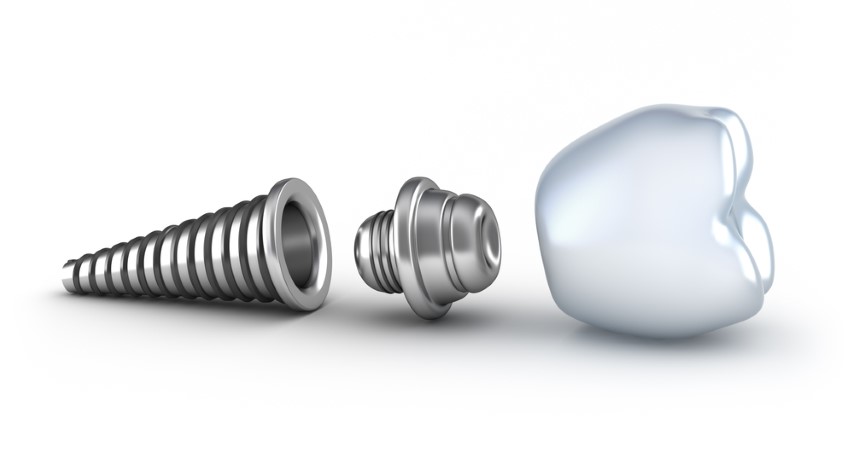
Unlike dentures, which over time can become ill fitting and uncomfortable, dental implants are permanent. They are also incredibly durable, so much so that dental implants can last for decades without replacement and in some cases, a lifetime. Implants are also very life-like and even function like real teeth. For example, patients brush and floss their dental implants just as they would their biological teeth. The reason this tooth replacement option is so unique is the construction of implants. Consisting of a titanium rod, which is embedded into the jawbone, and a natural looking crown, implants replace both the visible structures of a tooth as well as its structure beneath the surface of the gums. [pullquote]Our implant dentist understands the negative effects that accompany tooth loss.[/pullquote]
Since titanium is treated by the body like mineralized tissue, the jawbone will fuse around the implant over time. This allows the titanium post to serve as a tooth’s root. A dental crown, made to exact measurements is then attached to the implant via an abutment. The crown provides a stable biting surface so patients can eat their favorite foods—and even harder-to-chew foods—with ease.
Benefits of Dental Implants
In addition to receiving a tooth replacement that appears and acts like a natural tooth, implants offer other benefits. When tooth loss occurs, many patients, even those with dentures, experience bone atrophy because the body resorbs bone mass. This can cause the face to appear “sunken in”. Implants, however, support bone health and prevent atrophy. Implants also provide support to neighboring teeth and will prevent further tooth loss so that teeth won’t collapse into empty tooth sockets.
To learn more about your tooth replacement options, contact North Shore Restorative & Implant Dentistry to reserve a consultation with our skilled implant dentist.
What Types of Dental Crowns are Available?
 Dental crowns are important and common restorations. Patients may require the placement of a crown for a number of reasons. The most common reasons a patient will need a crown is tooth fractures, extensive decay, or infected root canals. Our dentist and our skilled team provide a number of restorative and cosmetic services to help increase oral function without compromising a patient’s appearance.
What is a dental crown exactly?
Consider a crown to be a tooth-shaped cap. Unlike a filling, which only repairs a small portion of the tooth, a crown covers and protects the entire tooth above the gum line. Crowns restore teeth to their rightful size and shape while also providing a durable biting surface so that patients can enjoy renewed oral function without discomfort. This type of dental restoration may also be used to improve a patient’s appearance by covering diseased and/or worn down teeth.
What materials make up dental crowns?
Since a crown is tailor-made to the needs of each patient, these restorations are created in dental laboratories by trained technicians. Patients have a few options when it comes to the materials used. For the most natural appearance, our dentist may suggest an all porcelain crown. All porcelain crowns are typically best for the most visible teeth. Durable metals such as gold or silver are also used for crowns as well. These materials work well for the back teeth, especially molars because they can tolerate the everyday forces of biting and chewing food. A third and popular option is a metal or gold crown with porcelain fused over the outside. This type of crown is both extremely durable and natural looking.
How do I know what type of crown is best for me?
The only way to truly know which material is right for your needs is to discuss your options with our dentist. During your appointment, our dentist will take into account which tooth needs repair and your unique situation to help you determine the best treatment method.
To schedule a consultation, contact our practice by calling 516-484-6394 at your convenience.
Same Day Smiles: A Permanent Tooth Replacement Solution
 Our implant dentist knows that losing teeth is a traumatic and distressing experience for patients in our community. Losing teeth has an impact on everyday life—from chewing food properly to facing social situations with confidence. To compound the distressing nature of tooth loss, patients with traditional tooth replacement methods like dentures are often disappointed with their prosthetic teeth because they seldom fit properly and feel uncomfortable. Fortunately, by using the latest technology and clinical methods, our implant dentist can restore oral function and appearance with a process called same day smiles.
How do same day smiles work?
Same day smiles is a one-day surgical procedure that involves utilizing small dental implants, embedded in strategic locations throughout the jaw to anchor sets of custom made prosthetic teeth. While the procedure itself only takes one day, our implant dentist will work diligently to develop your treatment plan so that you can enjoy renewed oral function and a beautiful, natural looking smile.
What is involved in the treatment planning process?
After consulting with our implant dentist, if same day smiles is determined the best tooth replacement option for your needs, the treatment planning process will begin. First, a cone beam scan will be taken that produces very precise three-dimensional images of your jawbones and teeth. This three-dimensional image will be used in state-of-the-art software that helps our dentist determine where to place your dental implants along with determining the unique specifications of your prosthetic teeth. This process, also called computer-guided dentistry, helps speed up the surgical process while also establishing predictable results.
Will my new smile look natural?
Since your treatment is tailored to your individual situation and needs, your new smile will look and feel very similar to biological teeth. In addition to producing a very natural looking result, you will enjoy restored and comfortable oral function.
To learn more about your tooth replacement options, contact North Shore Restorative & Implant Dentistry to reserve a one-on-one consultation with our skilled dental team.
When can I return to work after a dental implant procedure?
Dental implant placement requires a surgical procedure performed by an implant dentist. Therefore, patients should be prepared for a certain recovery period before resuming their normal activities, as is the case with any surgery. Patients may experience some discomfort in the days following the surgery, and they may need to adjust their diets for a few days and avoid vigorous exercise, for example.
Fortunately, the surgery needed for dental implants is an outpatient procedure that is generally completed in a matter of hours. Patients return home the same day.
Many dental implant patients will return to work within 2-3 days, although that will vary based on individual factors and characteristics associated with the patient.
The number of dental implants placed will affect the recovery process. Patients who only get one or two implants may be able to return to work the next day, while patients who get more than that will need a few additional days.
If complications arise following the procedure, they can delay your return to work as well as your resumption of your daily routine. One significant risk associated with dental implants (along with any surgery) is a post-operative infection. Your implant dentist can give you instructions on how to keep the implant site clean to reduce your risk of infection.
Smoking also can interfere with healing, so patients who want a smooth recovery should also give up this habit, at least for a few weeks after dental implant placement, if not permanently. A patient’s overall level of health is also a factor. Patients in poorer health and those with chronic health problems may heal more slowly.
Patients should be well-informed about the dental implant placement surgery, as well as what they can expect during the recovery process. While planning for the implant placement procedure, be sure to discuss all aspects of the treatment and possible outcomes with your implant dentist so that you will know what steps to take to improve your chances of an uneventful and speedy recovery.
To learn more, contact the office of Dr. Gardner at at 516-484-6394 and schedule your consultation today.
Gingivitis and Your Overall Health
 Gingivitis is the mildest form of gum disease, but that doesn’t mean that this condition won’t have consequences for a patient’s oral health. If left untreated, gum disease can progress to periodontitis, a condition that can result in tooth and bone loss.
Not only does gum disease, including gingivitis, have the potential to wreak havoc on a patient’s dental health, it also has ramifications for the patient’s overall well-being. Gum disease appears to have a correlation with a number of systemic issues, like heart disease, diabetes and premature birth, among others.
Getting prompt treatment for gingivitis is another compelling reason to visit your dentist at least every six months. Dental appointments at such brief intervals allow your dentist to monitor your gums (and your teeth) for even minor changes that could indicate a problem.
During a routine dental exam, the best dentist will examine the gums for the signs of periodontal disease, looking for even seemingly innocuous symptoms like mild swelling or redness or light bleeding in the gum tissue after flossing.
Fortunately, gingivitis is the most readily treatable stage of periodontal disease. It typically responds to a thorough professional cleaning and follow-up with a daily oral hygiene regimen at home. However, when gingivitis advances into more severe forms of periodontal disease, the treatment is more invasive.
Good oral hygiene habits can reduce the likelihood that you’ll develop gingivitis or cut your risk of a relapse. Be sure to brush thoroughly, with the brush angled toward the gumline, for two minutes, two times a day. Daily flossing also will help to keep gum disease-causing oral bacteria at bay.
Don’t take gingivitis for granted. If you’ve noticed symptoms like swelling and bleeding, bring them to your dentist’s attention so that you can get treatment before your gum disease gets worse. Ultimately, taking action to address gingivitis will give your overall health a boost, too.
How Dental Implants can Reduce Long-term Dental Costs
 When faced with a decision on how to replace a missing tooth (or whether to replace it at all), patients should consider long-term factors in addition to any short-term concerns.
Patients have a number of options for tooth replacement, including dental implants, conventional dentures or dental bridges. Each treatment is unique and will have different effects on your oral health.
Dental implants tend to be the most durable and stable tooth replacement method. So, while the initial cost of dental implants may seem higher than the alternatives, those lower price-tags don’t reflect the cost of replacement appliances, potential damage to other teeth and other possible effects of dentures and bridges. [pullquote]Dental implants tend to be the most durable and stable tooth replacement method. [/pullquote]
Unlike dentures and bridges, the dental implant becomes a fixture in the patient’s jaw after the implant dentist places the implant. The bone forms a bond with the titanium implant, replacing the root structure underneath the gumline, in addition to the visible crown portion of the tooth.
This characteristic of dental implants preserves the integrity of the jawbone, reducing the chances that the implant will need to be replaced. In comparison, as the contour of the jaw changes, a denture or bridge will lose its fit. Temporary fixes will only go so far, and eventually the appliance will need to be replaced.
Furthermore, a dental bridge also affects surrounding teeth, which must be fitted with crowns to support the prosthetic tooth or teeth. That process requires the removal of healthy tooth enamel, which can weaken the tooth in the long term, potentially requiring additional treatments.
If you decide not to replace the tooth at all, the outcomes can be even more significant. The other teeth may shift to fill in the empty space and they may need to withstand unusually strong chewing forces because of the absence of other teeth that would assist in that function. Ultimately, the teeth may be damaged
Long-term costs associated with tooth replacement can vary widely depending on the chosen method. Work closely with your dentist or implant dentist to consider the durability and stability of your tooth replacement device. To learn more about your tooth replacement options, contact the office of Dr. Gardner at at 516-484-6394 and schedule your professional consultation today.
Do Dental Implants Require Special Care?
 With revolutionary technology and new techniques, patients with missing teeth have more treatment options than ever before. In the past, losing teeth likely meant a lifetime of struggling with ill-fitting dentures and the insecurities of a toothless smile. Fortunately, our implant dentist can restore missing teeth with biocompatible, permanent replacements that look and feel natural. Dental implants, unlike dentures or bridges, are firmly anchored in place below the surface of the gums so patients can enjoy complete oral function and durability.
The Components of a Dental Implant
A dental implant consists of two major parts. The first part is a titanium post that replaces a tooth’s root. This post resembles the appearance of a screw and is surgically implanted into the jawbone. Since it is made from titanium, the body treats the post like a natural, mineralized structure causing the jawbone to fuse around the implant through a process called osseointegration. This process stabilizes the implant so that patients enjoy a durable and stable anchor to their prosthetic tooth. The second component of a dental implant is a tooth-shaped crown, which is attached to the titanium post. This crown will fill in the missing space of the lost tooth above the gum line, providing a sturdy biting surface for chewing food. The crown can be made from materials that resemble a natural tooth such as porcelain or porcelain fused to metal. Once the crown is attached, a patient no longer has a visible gap in their smile and their prosthetics will appear natural to others.
Oral Hygiene with Dental Implants
Unlike removable prosthetics, which are sanitized with cleaning solutions, dental implants are treated like biological teeth. This means that patients with implants will brush and floss as normal. The materials used to make implants are resistant to harmful oral bacteria. Patients should practice thorough oral hygiene, though, because the gum tissue surrounding an implant is vulnerable to infection just like gum tissue supporting natural teeth.
If you have experienced tooth loss, we welcome you to schedule a consultation with our implant dentist, Dr. Gardner, to determine if dental implants are right for your needs. Call our practice today to set up your appointment.
How Stain-Resistant Are Porcelain Veneers?
 Used to produce a total smile makeover, porcelain veneers conceal a variety of flaws in one’s smile. Living with smile imperfections can take a toll on a patient’s confidence and self-esteem. Many patients with stained, crooked, and visibly damaged teeth are embarrassed to smile around others and often avoid social situations because they feel self-conscious. Fortunately, patients no longer have to live with a less-than-perfect smile after receiving a smile makeover from our cosmetic dentist.
The Basics on Porcelain Veneers
Veneers are handcrafted cosmetic enhancements that are permanently bonded to the outside of teeth. Custom made from very thin pieces of tooth-colored porcelain, each veneer conceals imperfections on a single tooth. Porcelain veneers conceal flaws such as crooked, overlapped, and gapped teeth along with covering permanent stains. After the procedure is complete, patients enjoy a celebrity-worthy smile that is free of noticeable flaws and imperfections.
How Porcelain Veneers are Made
Each veneer is handmade in dental laboratories from high-quality pieces of porcelain. Our cosmetic dentist will take impressions (molds) of your teeth so that your veneers are made to the proper size and shape to complement your smile. Your veneers will accentuate the shape of your mouth and teeth for a natural look. Once your veneers are created, you will return to our office for placement. The placement process is a minimally invasive procedure that usually does not require anesthesia or sedation.
Veneers Preserve Your Smile for Years to Come
Unlike natural teeth, porcelain veneers are resistant to permanent staining. For additional protection, veneers feature a durable glaze. This glaze helps veneers maintain their tooth-like luster for a natural and beautiful appearance. Veneers are cared for like biological teeth. Patients will continue to brush and floss as normal.
In addition to porcelain veneers, our cosmetic dentist offers professional teeth whitening, white restorations, and cosmetic bonding to improve the appearance and function of smiles. Contact the office of Dr. Gardner today to reserve a cosmetic dentistry consultation with our team.
Dental Implants: How long will I be without replacement teeth?
 Losing teeth in adulthood is a distressing experience that affects a patient’s ability to chew food comfortably and efficiently. Eventually, tooth loss leaves nearby teeth unsupported and puts them at risk for collapsing into empty tooth sockets. Tooth loss also has psychological effects; many patients develop a depressed mood and develop anxiety during social situations because they feel embarrassed by their incomplete smiles. For the reasons listed above, it is very important to your oral health and overall wellbeing to replace lost teeth.
Using state-of-the-art technology, our implant dentist can restore smiles more quickly than with traditional dental implant methods. In the past, patients had to wait until their treatment was complete and in some cases, went months without enjoying the benefits of replacement teeth. Today, however, the implantation process can be completed much more quickly with the same day smiles approach.
Benefits of Dental Implants
Dental implants replace both a missing tooth’s crown and its roots. When compared to dentures or bridges, which rest on top of the gums, dental implants are more durable and stable because they are anchored directly into the jaw. Since the implant is embedded into the jawbone, the replacement tooth will not slip or slide in the mouth as a removable prosthetic would. Furthermore, dental implants prevent bone atrophy.
How Same Day Smiles Works
In one clinical appointment, patients will receive both the implant post and the replacement crown. Prior to performing the same day smiles procedure, our implant dentist will use cone beam imaging and other technologies to develop an efficient treatment plan, which includes producing a prototype denture and the use of virtual surgery technology. Virtual surgery provides a simulation of the surgical process along with thorough surgical guide for the procedure itself. Using technology for all the preparation allows our implant dentist to precisely REPLACE the dental implants and attach their prosthetics in one appointment.
To schedule an implant dentistry consultation where you can learn if same day smiles are right for you, contact the office of Dr. Gardner at 516-484-6394 today.
Porcelain Veneers: A Versatile Cosmetic Treatment Option
 Patients may consult with a cosmetic dentist regarding treatment for any number of issues that are negatively affecting the smile’s aesthetics, such as stains, chips or cracks in the teeth, or unattractive misaligned teeth.
In many such cases, the cosmetic dentist can use porcelain veneers to correct the problem.
Porcelain veneers are very thin, tooth-shaped shells that conceal flaws like those mentioned above. They can brighten deeply stained teeth and even create the appearance of a properly aligned smile when the natural teeth are slightly crooked.
The process of designing and placing the veneers is completed in just a matter of weeks. At the initial appointment, the cosmetic dentist will take impressions of the patient’s teeth, and those impressions are then sent to the dental lab tasked with creating the veneers.
Depending on the thickness of the veneer, the tooth may need to be prepped in advance for veneer placement. The dentist will remove a thin layer of enamel to accommodate the veneer, if necessary. Some veneers are so thin, however, that this step is not required.
When the veneers are ready to be placed, the patient returns to the office for a second appointment. At that time, the dentist is able to make any additional adjustments to the color or shape of the veneer, at the patient’s request. When the patient is satisfied with the veneers’ appearance, the dentist then bonds the veneers atop the natural tooth.
Because the porcelain shares many optical qualities with natural tooth enamel, these veneers are remarkably lifelike. The cosmetic dentist will take great care to design the veneers to match the shade of the patient’s enamel.
The veneer’s shape is also important, and it should mimic the contours of your natural teeth so that it blends in with the smile rather than stands out as blatantly artificial. The dentist will also give this aspect of the veneers’ design ample consideration in the treatment process.
Patients who want to enhance their smiles in a brief timeframe should consult with our skilled dental team at North Shore Restorative and Implant Dentistry to learn if porcelain veneers will be feasible in their cases. These tiny porcelain shells can have a dramatic effect on the smile’s appearance.