North Shore Restorative & Implant Dentistry
The Best Option To Replace Missing Teeth? Dental Implants
Dental implants are the closest thing to natural teeth you can get!
People who are missing teeth often find it difficult to chew and swallow, and this can affect your digestion as well as your general health and well-being. However, it seems that what most people are not aware of is that missing teeth can lead to other dental issues: if a tooth is missing the other teeth on either side will attempt to fill in the gap. The other issues from missing teeth are, potentially, bone loss and gum disease.
Bone loss results in jawbone shrinkage that can change the shape of your face. If this does happen it will give the person the appearance of a sunken face, lips will appear thinner and the skin around the mouth and neck will wrinkle.
Another problem: people unfortunate enough to suffer gum disease or ailments related to their jawbone may not be able to have dental implants. This is due to the fact that dental implants need to be REPLACEed into the jawbone and if it has been adversely affected by gum disease or missing teeth; you may need to consult your dentist for other options.
At North Shore Restorative and Implant Dentistry, we are here to help…
It is important to know we going to a dentist that no single component of the mouth is more important than the other. The mouth is a delicate system which involves your teeth, lips, gums and musculature; and the associate structures.
At North Shore Restorative and Implant Dentistry in Long Island we want our patients to know that our dental professionals work closely with this knowledge to help you achieve the perfect smile.
Dental Implants…
The effect of losing a tooth can have a substantial impact on a person’s physical and psychological well-being and the dental implant is, arguably, the best option for missing teeth. Dental Implants allow a patient to regain the structural component of their teeth: it also allows them to reclaim the beauty of their smile!
What are Dental Implants…
Dental Implants are artificial teeth replacements. At North Shore Restorative and Implant Dentistry in Long Island, our skilled dentists will be able to fit the implants so they look just like your natural teeth. Dental Implants are ideal for replacing one missing tooth, restoring an entire mouth or retaining a removable prosthesis and are a long lasting, cost-effective means of treatment missing tooth or teeth.
The Procedure…
- Dental Implants are surgically REPLACEed into the jawbone and act as anchor within the mouth.
- As time progresses the jaw will attach itself to the Implant. What this allows for is Implants or dentures to be permanently fastened into place.
Dental Implants have changed dentistry. Dental Implants are a viable option for the replacement of teeth. And not only that, but dental implants are also proven to improve bone and supporting structures.
Thanks to recent developments in Implant Dentistry we are now able to perform the surgery without incisions. This is means virtually no pain or discomfort while your mouth is reinvigorated.
At North Shore Restorative and Implant Dentistry in Long Island we understand that the look of a smile is just as important and this is why we can happily say that dental implants provide not only an outstanding functional benefits but also aesthetic benefits.
To discover more about our implant dentistry, or to book an appointment at our conveniently located Long Island dental practice, please do not hesitate to contact us.
Five top reasons to opt for implants over dentures
At North Shore Restorative and Implant Dentistry we specialize in safe, effective and long lasting dental implant treatments…
Sometimes tooth loss is inevitable, but in the general sense it is usually due to poor oral hygiene, severe trauma or periodontitis (an infection of the gums). Many Americans have admitted to feeling devastation after losing a tooth, and at North Shore Restorative and Implant Dentistry in Long Island, we provide a permanent, effective and natural-looking solution to your tooth loss. A multitude of patients frequently ask what the difference is between removable dentures and dental implants, so we have compiled the best reasons why dental implants are in fact the better option.
What are dental implants?
The Dental implant treatment is a surgical procedure that utilizes tiny titanium screws that are REPLACEed into the jawbone. After a period of months, the jawbone accepts the screw as part of your biological makeup and fuses with the screw (a process called Osseo-integration) to form a solid and durable anchor point for your dental implant. A porcelain crown is then placed over the implant to complete the procedure, providing full functionality and esthetics back to your smile.
Why are implants a better choice?
There are a multitude of advantages with dental implants, ones that are not present with removable dentures. Don’t be fooled by the aura of convenience that emanates from removable dentures, as convenience now will be substituted with hassle later on.
1. Dental implants look and feel completely natural
Once the Osseo-integration process is complete and your implant is secure, dental implants provide a permanent and solid solution to tooth loss. Whereas removable dentures do not look natural inside the mouth and can slip from placement, causing discomfort.
2. Dental implants are more comfortable
Since the implants are fused with the jaw, they feel completely like your own natural teeth. This means they would feel secure and totally comfortable, you might even forget they are implants! Removable dentures do not offer this benefit, as they are clipped in to the mouth it is possible for them to move around and cause discomfort and even lower self-esteem.
3. Dental implants are a durable, solid tooth loss solution
Removable dentures need to be cleaned every night and would, with time, require replacement. Dental implants are a permanent answer and provide a solid and durable base for your new teeth.
4. No more fear!
One of the greatest benefits of dental implants is the removal of the fear of losing your teeth! Because they are a permanent solution, if taken care of properly you do not have to worry about losing removable dentures and paying for a new set!
5. Dental implants give you back full function of your mouth!
Don’t worry about biting into that apple ever again! With dental implants you can eat what you like, when you like without having to worry about your teeth falling out or becoming damaged!
Gain the best in dental implants with the help of Dr. David Gardner at North Shore Restorative and Implant Dentistry, located at Long Island.
Caring for your dental implants – an important commitment you cannot neglect!
Dental implants are a permanent solution to your tooth loss that restores function and esthetics to your smile… as long as you look after them!
At North Shore Restorative and Implant Dentistry in Long Island, we understand how the loss of a tooth can impact a patient’s self-confidence and esteem. This is why we offer the innovative restorative dental treatment dental implants! Dental implants provide a permanent, solid and durable solution to tooth loss and enable you to eat whatever you like! However, if not taken care of properly, the implants can come loose or even fall out.
Taking care of your dental implants…
Taking care of your dental implants is as easy as maintaining your good oral health routine! Your oral health routine should include:
• Brushing your teeth at least twice a day, with a soft-bristled toothbrush and held at a 45 degree angle: this will help you brush your periodontal tissue (gums) as well as your teeth.
• Floss at least once a day, preferably before sleep: this will help remove excess food debris between your teeth that would otherwise provide a breeding ground for harmful bacteria.
• Visit us at North Shore Restorative and Implant Dentistry every six months to help ensure the health of your teeth and dental implants.
Take care of your dental implants and they will provide you a solid, durable and functional tooth replacement.
For more information on dental implants or to book an appointment at our Long Island dental practice, please contact us.
73 Percent of the American population admit devastation if a single tooth is lost!
A recent survey found that nearly three quarters of the American population would be self-conscious if they lost a tooth…
It seems even more Americans are worried about their teeth – with nearly three quarters of the population admitting they would be devastated if they lost a tooth!
At North Shore Restorative and Implant Dentistry on Long Island, we understand how traumatising and stressful it can be to lose a tooth, which is why we have compiled several treatments to restore smiles to full function and treat tooth loss.
Enjoy a full smile again with dental implants…
We are committed to providing you with effective treatments that not only restore esthetics to your smile, but also functionality. If you are suffering from missing teeth and are seeking a permanent solution, dental implants could be for you!
What are dental implants?
Dental implants provide a permanent solution to tooth loss and are essentially titanium screws which are surgically REPLACEed into the jawbone to replace the tooth root. Over a period of months the jawbone accepts the screws as part of the patient’s biological makeup and fuse with the implant. A porcelain crown is then placed over the implant to create a sturdy, functional and beautiful tooth loss solution!
Receive the best in treatment and care with Dr. David Gardner…
Know you are in the best and most capable hands with Dr. David Gardner, a dental professional who is not only extensively qualified, but also caring and compassionate. With exceptional attention to detail our practice offers cushioned head read pillows and cozy blankets for your comfort while in the dental chair. With flat screen TVs, video iPods and soothing music, we know you will be relaxed at our tranquil clinic!
Gain your perfect smile in just one sitting with North Shore Restorative and Implant Dentistry!
Hide your teeth no longer and gain your beautiful smile in just one appointment!
At North Shore Restorative and Implant Dentistry, we understand how missing teeth can be embarrassing and hinder your self-confidence. That is why we utilize advanced dental technology to fix the gaps in your smile in just one appointment! Imagine – walking into our practice and leaving with confidence and a brand new, fully functional smile!
Gain all the benefits of dental implants without the wait or recovery time…
With the Same Day Smile, our expert dentists can rejuvenate and enhance your smile to full esthetics and functionality! Even better – with much less discomfort, swelling and bruising than a typical implant procedure, you can resume normal activities the very next day!
How does the Same Day Smile work?
The process begins with a CAT scan of your jawbone which creates a 3D rendering. This rendering allows us to plan your implant placements without you even being present! This means more free time for you and less time in the dental chair! After your treatment plan has been reviewed by you and Dr. Gardner, implants are constructed at a robotics facility and all surgical components are ready to go.
Your one surgical visit will consist of the REPLACEion of the implants and teeth aided by computer generated materials. It often requires no incisions, no sutures and minimal post-operative swelling or discomfort.
Experience a beautiful new smile in just one appointment with the help of Dr. Gardner at North Shore Restorative and Implant Dentistry in New York.
Revolutionary product could be the end of tooth decay
A microscopically thin film that can coat individual teeth has been created in Japan
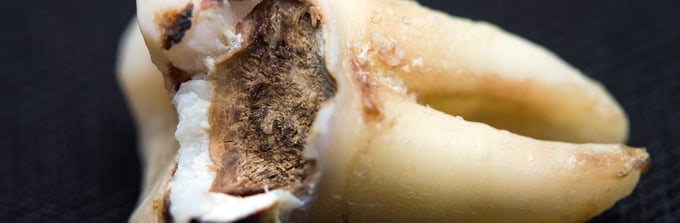
Soon tooth decay may be gone for good with the revolutionary ‘tooth patch’; a durable, ultra-flexible film made from the material mainly found in tooth enamel. Scientists in Japan recently created the film, which can coat individual teeth to prevent decay and also be an end to sensitive teeth!
Once adhered to the tooth surface, the film provides excellent protection against plaque, tartar and decay, which means your smile will be more clean and beautiful than ever before!
What’s more, scientists say the film can come in a white version, which can whiten teeth instantly for cosmetic dentistry!
Cosmetic Dentistry at North Shore Restorative and Implant Dentistry…
Since this technology is still being researched and developed, it will be a while until we see this exciting product hit our shores. Until then, we at North Shore Restorative and Implant Dentistry in New York, have fantastic cosmetic dentistry treatments that will leave you feeling beautiful and your smile gleaming.
Our cosmetic dentistry treatments include:
Find your smile again…
At North Shore Restorative and Implant Dentistry, we work on the paradigm that focuses on the quality and integrity of our service to you. With Dr. David Gardner, you are in some of the most expert and knowledgeable hands in the profession.
For more information on our treatments or to book a consultation, please contact us.
Revolutionary technology at North Shore Restorative and Implant Dentistry
Experience the best in dental technology

Dr. David Gardner, at North Shore Restorative and Implant Dentistry, knows it is important to utilize up-to-date technology to bring his patients the best oral health care possible. These advancements in technology have created more avenues for easier detection and proper diagnosis of issues such as periodontal disease, dental cavities and tooth decay, which can then be treated with preventative dentistry, surgical procedures and others aided by new technology.
Technology at our North Shore clinic…
At North Shore Restorative and Implant Dentistry we are excited to encompass an array of new technology sweeping our clinic by storm; creating a much simpler and more comfortable dental experience for you! We want you to feel relaxed and content at our clinic, which is even more achievable now with our new hi-tech treatments.
Introducing CEREC…
CEREC, an acronym for (CERamic REContstruction), utilizes a variety of technological advancements including 3D photography CAD/CAM for the restoration of chipped, cracked or decayed teeth.
This technology can create inlays, onlays, full crowns or veneers in a matter of minutes, within a single sitting. Comprised of compressed porcelain material which is the closest material to that of a natural tooth, CEREC is the best restorative option as:
- It is bio-compatible with your tooth and mouth
- It will protect and preserve the weakened tooth structure
- It looks and feels just like a real tooth!
Other technologies…
Other technologies utilized at our clinic include:
- Diagnodent: This helps us to diagnose dental caries at the earliest possible stage by using a fluorescent laser.
- Digital X-Rays: These allow a much better look inside your mouth to determine the best treatment option for you.
- Intra-oral camera: This allows full view of the mouth by REPLACEing a tiny camera into the mouth, which then records and displays the picture on a TV in real time.
For more information on dental technology or to book a consultation, please contact us.
TMJ:What is Disc displacement?
What is discus displacement?
Discus displacement is an expression for the deviation of the discus position from an arbitrarily fixed “standard” position.
The discus is a kind of cartilaginous spacer between the mandibular condyles and the sockets. Discus displacements are often differentiated between discus displacement with reposition and discus displacement without reposition.
The diagnosis of “displaced discus” arises from a very mechanical view of the human body. Till today it has not been established whether a clear physiological position for the discus exists at all. Many people have a displaced discus but no problems whatsoever. Then again, there are others who have no displacement but nevertheless have problems with the joint of their jaws. Many doctors are moving away from rigid concepts because of new discoveries. The discus position seems to be losing significance in respect to jaw joint complaints.
According to the old concept a definition of displaced discus with reposition exists when the discus, in the course of movement of the lower jaw, “jumps” back onto the mandibular condyle. A displaced discus without reposition, according to the old concept definition, exists when the discus doesn’t jump back on the mandibular condyle but rather remains displaced during the entire movement of the lower jaw.
The symptoms if a discus displacement (DD) are very variable. Jaw-cracking, for example is not a sure symptom of discus displacement. A DD is not always associated with pain either. Hypotheses about the origins of DDs have have changed very much in the last 70 years, starting from a mechanical model, moving more and more into physiological theories and now we’re moving into bio-psycho-social concepts.Biopsychosocial in the listing of DD as an illness means that genetic, social and pyschological factors play a part. The causes of the formation of DD with or without reposition are not easily explained. What is interesting is that women suffer from illnesses of the jaw joint far more frequently than men do.
The diagnosis of a DD with or without reposition is nowadays formed on the basis of clinically occurring symptoms. As a rule, treatment initiatives on the basis of unresolved existence of DDs depend on the symptom. In other words you yourself ultimately decide whether a DD is to be treated or not. If you don’t have any, or have hardly any problems then there’s no indication for treatment.
A discus displacement without reposition is not usually fully treatable since a manual reposition of the discus normally only very rarely works. Non-surgical treatment measures (such as splints) are usually aimed at reducing the adverse effects of DD. Occlusion splints can indeed, depending on the severity of the problem succeed in obtaining a reposition of the discus. The result however cannot be securely stabilised. A reduction in the problem will, independently of the discus reposition, also be achieved after a short period of wearing the splints.
Otherwise there are surgical measures available which may be aimed at discus reposition, discus removal (discectomy) or pain relief througn rinsing of the jaw joint (arthrocentesis with lavage). None of these methods however have been able to demonstrate any advantage when compared to non-surgical treatments.
The following is a summary of symptoms and treatment of DD:
- Jaw joint cracking is not characteristic of a DD with reposition
- A DD without reposition is often correlated with a sudden temporary reduction of the opening of the jaw
- DDs are not always associated with pain. Pain is however more common with DD without reposition
- The risk of a DD with reposition becoming a DD without reposition cannot be established scientifically
- The chance of reposition of the discus gets less with the progress of time with a DD
- DD pain is very treatable. The altered discus position is not
- It is not necessary to treat a DD which doesn’t cause problems
- As a result of a DD without reposition degenerative changes of all the joint structures may occur. Clear changes to the structures can be established morphologically. Nonetheless these are considered to be self-limiting adaptation occurences
- With the application of conservative treatment measures the pain symptoms and the width of the opening of the jaw can be positively influenced in patients with DD without reposition however they can rarely be completely overcome
- Pain symptoms influence one’s quality of life more strongly than the limited opening of the jaw
- Why some patients experience a change and remain virtually pain free whilst others remain prone to serious problems is still not clear
- There have been and are very many useless treatments on offer for DD, such as, for example Pulsing Signal Therapy (PST) or athrocenteses
- The clinical results for existing DDs improve significantly during an observation period of close to 2 years
- Since the necessity for treatment is determined by the clinical symptoms as opposed to the findings of investigations conservative methods of treatment should be preferred
What is Saliva?
Saliva is secreted by the salivary glands
Saliva is produced in the mouth both by small salivary glands in the mucosa and also by the large salivary glands – the glandula parotis (parotid gland), the glandula submandibularis (sub-mandibular gland) and the glandula sublingualis (sub-lingual gland).

Depending on the gland the saliva is rather watery (serous) or slimy (mucous). The small glands mainly produce mucous saliva, the large mainly serous. In the oral cavity there is therefore a mixture of these different types of saliva. An adult produces about 0.6 to 1.5 litres of saliva per day. Even without absorbing nutrition saliva is produced constantly.
Saliva contains many different components, including complex polysaccharides, various proteins, ions (such as calcium, kalium, natrium and chloride) and traces of fluoride and rhodanide. Blood group components and antibodies are also to be found in saliva.
Saliva contains numerous mineral salts necessary to maintain the hardness of dental enamel and to protect it from the attack of acids. Almost every time we eat something bacteria convert the sugar contained in the food into acid. This causes caries since it attacks the surface of the tooth and destroys the minerals there. The natural protective function goes into action: saliva contains natural mineral components which dilute and destroy these acids. In addition saliva supports the absorbtion (remineralisation) of minerals in the enamel which harden the teeth, thereby acting against the creation of caries. As long as there is a balance between demineralisation and remineralisation there won’t be problems.
However, too many snacks containing carbohydrates eaten between meals will overload this defence system.
The first sign of oncoming caries (initial caries) is a white spot. There’s more about this in the video ‘Initial Caries’. At this stage the process can be reversed with fluorides. More about this in the videoSealing Caries. Our saliva doesn’t only protect our teeth, however; by keeping our mouths wet it enables us to swallow, speak and taste. Saliva also has an antibacterial effect through the substances it contains, such as lysozyme, immunoglobin A, lactoferrin and histatin. In addition saliva promotes the absorbtion of vitamin B12.
A temporary increase in the flow of saliva is usually a reflex triggered by particular external influences:
- Taste: stimulation of the taste buds by materials put in the mouth
- Touching: stimulation of the sensory nerves in the mouth
- Smell: stimulation of the olfactory nerves in the nasal sinuses
- Sight: stimulation of the optical nerves in the orbits
- Stimulation of the stomach and intestinal nerves in the digestive tract
If over-production of saliva persists – a condition called sialorrhoea – this can be a sign of illness, as can under-production of saliva – xerostomia. There’s more about these conditions in the videos with the same names.