




North Shore Restorative & Implant Dentistry
Oral Bacteria: Get the Facts
 We all have bacteria in our mouth, good and bad. But what exactly do these bacteria do? We’ve got all kinds of information on the role bacteria play in your oral health. Learn more about those pesky bacteria in your mouth!
Fact #1
There are anywhere between 500 and 1,000 different kinds of bacteria in our mouths.
Fact #2
Babies’ mouths are free of bacteria at birth. However, bacteria is transferred into their mouths from their mothers within hours of birth, mainly through kissing and food sharing.
Fact #3
Saliva flushes harmful bacteria out of the mouth by making it hard for bacteria to stick to the surfaces of our teeth.
Fact #4
Some foods can also flush bacteria from the teeth. Crunchy vegetables like carrots and celery stimulate the gums, while acidic fruits like apples increase saliva production to wash the teeth clean.
Fact #5
The tongue holds a significant portion of the mouth’s bacteria. It’s just as important to clean the tongue as it is to brush and floss, because bacteria on the tongue contributes to gum disease and bad breath. Try using a plastic or metal tongue scraper to clear out bacteria!
Fact #6
Hormonal changes during pregnancy put soon-to-be mothers at a higher risk of tooth erosion. Morning sickness and general hormonal changes cause acidity in the mouth to increase, which in turn erodes enamel.
Fact #7
Smoking increases your risk of tooth decay and gum disease. Not all bacteria are bad; in fact, some are even necessary to maintain hygienic balance. However, smoking tobacco destroys helpful bacteria in the mouth, which promotes the growth of harmful oral bacteria.
Fact #8
Oral bacteria multiply in number every 4-5 hours. No wonder it’s so important to brush teeth twice a day!
Who knew something so small could have such a big impact on your oral health! Make sure to schedule regular dental exams with us to keep oral bacteria under control for a clean, healthy smile!
Rubber Tipping: A Guide to Gum Health
 Brushing and flossing are important aspects of our daily dental routine, but they’re only two parts of the oral health equation. Good oral hygiene goes beyond a simple teeth cleaning. While gum health is often overlooked, a quick trip to the drugstore is all it takes to find the right tools for keeping gums healthy! If you want to avoid the risk of gum disease, it’s time to introduce rubber tipping to your routine.
What is rubber tipping?
Rubber tipping is a technique that strengthens the gums with the use of a handheld dental instrument called a rubber tip gum stimulator. You simply apply pressure to the gums to help prevent gingivitis, a mild form of gum disease, and periodontitis, a more serious form of gum disease.
How do you use a gum stimulator?
- Brush and floss your teeth first to remove as much food debris as possible.
- Run the rubber tip of the gum stimulator under hot water to soften it for gentler use.
- Gently massage the gum line with the rubber tip. You can also run the stimulator between your teeth to remove any remaining food debris.
Why should I use a gum stimulator?
Gum stimulators are time-efficient, multipurpose instruments that improve overall oral health. They primarily stimulate the gum tissue to strengthen it against infection, but they also help with cavity prevention by assisting food and plaque removal.
How does rubber tipping affect jawbone health?
Jawbone loss is a serious concern that is linked to poor gum tissue health. Tooth loss is a primary symptom of gum disease, and it has a devastating impact on the jaw. With missing teeth, the jawbone no longer has something to support, and it begins to deteriorate from underuse. Jawbone loss drastically worsens jaw function and facial structure overtime.
Because gum stimulators are crucial in preventing gum disease, they also eliminate the need for procedures such as bone grafting, which promotes bone regeneration after the jaw has atrophied.
If you have any concerns about your gum health, consider adding rubber tipping to your dental care repertoire!
No Teeth? No Problem!
 Are missing teeth causing you difficulty, discomfort or embarrassment? Don’t worry – we have all the facts about tooth replacement treatments and the effectiveness of dental implants as a long-term solution for missing teeth.
What are dental implants?
Dental implants are replacement teeth made of titanium. They are composed of an artificial crown attached to a screw that is surgically implanted into the jaw for stability. Implants are an effective treatment for missing teeth because they maintain the strength of the jaw.
There are a few alternative treatment options, some more lasting than others:
Flippers are temporary, removable plastic teeth. They are attached to a retainer for easy removal. Flippers are one of the most cost efficient tooth replacement methods; however, they are the least durable alternatives to dental implants and are considered short-term solutions until a more lasting treatment can be performed.
Fixed bridges literally “bridge” gaps caused by one or more missing teeth. A dental bridge consists of a false tooth, called a pontic, and two abutment teeth, which are crowns that anchor the bridge to the teeth on either side of the gap. Abutment teeth can be secured to both natural teeth and dental implants; however, anchoring them to natural teeth can cause damage.
Dentures are a common treatment for individuals missing all their teeth in one or both of their jaws. They are made of a removable frame that holds an entire set of teeth.
Removable partial dentures are removable frames that hold a partial set of teeth rather than a full set of teeth. This option is often considered for individuals who are missing some but not all of their teeth in one or both jaws.
Why choose dental implants?
Implants are the longest lasting treatment for missing teeth. With proper care, dental implants can last up to ten years or longer. Because they are surgically anchored into the jawbone, they function like natural teeth.
Dental Implants: High Tech Teeth
 What are dental implants? Dental implants are replacement tooth roots that provide a foundation for both fixed and removable replacement teeth. Like roots, dental implants are secured within the jawbone and not visible once surgically placed. Teeth replacement is not new to dental technology. Early civilizations practiced teeth replacements; archaeologists have discovered skulls where teeth have been replaced by cast iron and sea shells. Despite their primitive methods, some of these implants were fused with bone like modern dental implants! However, unlike the ancient cast iron or sea shell implants, modern implants are composed of titanium. Titanium is lightweight, strong, and biocompatible.
According to the American Academy of Implant Dentistry (AAID), dental implants have the highest success rate of any implanted surgical device — 98%. Dental implants are available in several designs that meet individual needs: single tooth replacement, multiple tooth replacement, implant supported prosthesis (removable), and an implant stabilized denture. Aside from meeting individual needs, there are a few other advantages to having dental implants:
- Improved appearance. Dental implants are designed to fuse with bone, and look and feel like your natural teeth.
- Improved comfort. Because dental implants become an extension of your natural mouth, implants remove the discomfort associated with removable dentures.
- Easier eating. Dental implants act as your natural teeth, allowing you to eat without the pain and discomfort that often accompany slipping of dentures.
- Improved self-esteem. Dental implants give your best natural smiling, helping build self-confidence!
- Improved oral health. Dental implants are the only proven way to prevent bone loss after the loss of natural teeth. The jawbone needs consistent chewing action to stimulate continual bone growth. Tooth/teeth replacement with dental implants offers a solution to prevent bone loss.
- With proper care, consistent brushing, flossing and routine dental visits, dental implants can last 40-years to life.
If you are interested in dental implants, or have any questions regarding the procedure, call the office today!
What Type of Floss Should I Use?
We know we don’t have to tell you this—but flossing at least once a day is key to healthy gums and teeth! And while studies have shown it doesn’t really matter what kind of floss you use (as long as you do it!), people are more likely to use floss that’s easy for them to use. We’ve broken down the different types of floss, so you can decide which is best for you!
Waxed and Unwaxed
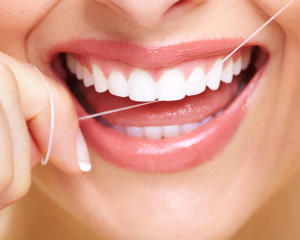 Waxed floss will glide easier, but there isn’t really any other difference between waxed and unwaxed floss. If your teeth are close together, try one of these.
Ultra Floss
Ultra floss is a thicker floss that can be stretched to fit between tight spaces between your teeth; this is a good option if the closeness of your teeth varies.
Tape
Dental tape is a relatively new addition to the floss family. This fatter floss option is made from plastic and has a bit more stretch. If you have wide spaces between your teeth or have sensitive gums, try this ribbon-like floss.
Flossing picks
If you find yourself on the go—or if you hate the feeling of floss wrapped around your fingers—try disposable picks that have handles to make flossing a little easier!
Oral Irrigators
Recent trials are inconclusive on whether using a water flosser is as effective as traditional floss, but studies agree that using an oral irrigator is better than not flossing at all!
So which one is the best? Any one you’ll actually use! Don’t hesitate to ask us for different types of floss at your next cleaning to see what works best for you!
Dental Implants: FAQ
Dental implants are becoming more and more popular these days, and we can see why. The ability to replace a missing tooth with a brand new one is an attractive concept.
We know that people often have questions about implants, so we have put together this page to answer those common questions:
What is a dental implant?
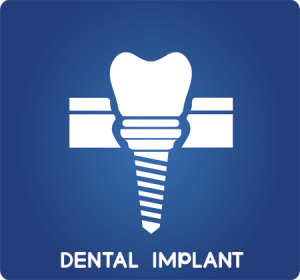 Implants are artificial teeth that function exactly like your natural teeth. We take a titanium screw, attach it to your jaw, allow the jaw to grow around the screw, and then fit the new tooth in right where the old one used to be. It will feel exactly like your old tooth used to when you had it.
How quick is the procedure?
It depends on just how strong and healthy your jaw is. Your jaw may very well be ready to receive the new tooth quickly, but it may also take time to grow around the screw. If your jaw is weak, we can also transplant bone from other parts of your body first, via another procedure called “bone grafting”, to grow a fresh, strong base where the screw can be inserted. If that is the case, the whole process takes more time, but again, it depends on your case.
Does it hurt?
No. Medications and anesthesia are available to reduce or eliminate pain. You shouldn’t feel a thing.
Since it’s an artificial tooth, do I need to care for it as if it were alive?
You should clean and maintain your implant exactly like you do with your living teeth. Though the implant isn’t going to die, it can still allow bacteria to build up, like your other teeth do. Clean all of your teeth with care, and they should all stay healthy.
How long do they last?
If your implant is taken good care of, it should last a long, long time. Perhaps 40 years and sometimes even a lifetime!
What should I eat after the procedure?
Eat soft food. We will help you decide on a diet that works for you depending on the specifics of your case and treatment.
Have more questions? Call us! We would be glad to set up an evaluation.
Order of Your Oral Hygiene Routine
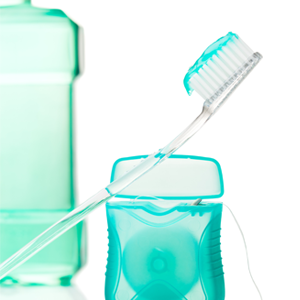 You’re awake, congratulations! Now, you are standing in front of the bathroom mirror, you’ve been wanting to upgrade your oral hygiene routine but you’ve heard a lot of conflicting information. There are so many tools and what order should you do them in? We’re here to help! If you’ve ever wondered, “What comes first brushing or flossing?” Read on!
- You’ve probably heard us stress the importance of flossing at your appointments. Flossing is an incredibly important part of your mouth’s health. Flossing your teeth should take place one time per day. We recommend at night so that food does not rest in between your teeth while you sleep. Flossing before brushing is a lot like dusting before you vacuum. The particles will loosen with flossing and the brushing will sweep them away.
- You may have guessed it: the second part of your oral hygiene regimen should be a 2-minute brushing. Dentists look at your mouth in terms of quadrants. Therefore, your mouth consists on four separate quadrants and to ensure proper use of your two minute brushing session, we recommend spending 30 seconds in each quadrant. This brushing routine should take place two times a day!
- Brushing your teeth alone will not eliminate the majority of the harmful bacteria in your mouth. Cleaning your tongue is an easy addition to your routine and will benefit your mouth greatly. Take your toothbrush, apply a very small amount of toothpaste and brush your tongue in gentle, circular motions. You may opt for a tongue scraper instead, they can be purchased at most grocery stores.
- The finishing touch for optimum oral health is mouthwash. Sip a small amount and swish for 30-40 seconds. Spit it out and you are done!
It may seem like a lengthy routine but it actually only totals about 4 minutes. If you value your oral health and want to spend less time in a dental chair, it will be worth your time, we promise!
Porcelain Veneers for a Flawless Smile
 You may already love your smile – that’s great! But what if you’re not happy with some of the minor details? To perfect an already great smile, we may recommend veneers. Porcelain veneers are a great tool for correcting minor imperfections on the surface of teeth and spacing issues as well!
Here are some common questions we are asked regarding veneers:
Will they feel weird on my teeth?
You won’t feel a thing. Veneers are thinner than your fingernails, so you won’t even notice them in your mouth. They are far less intrusive (and embarrassing) than braces.
How long do they last?
Longer than your car. A good, properly placed veneer can last from 10-20 years. And, just like a car, the better you take care of your veneers, the longer they’ll last. A great investment for an enhanced smile!
Will they ever fall off?
They’re not going anywhere. Veneers are attached to your tooth with a very strong bonding compound. It’s like superglue designed for teeth. They do not fall off and provide years of durable use.
Do veneers look like natural teeth?
You can count on it. Porcelain is the perfect material to copy tooth enamel, as it incorporates luster, shine and translucence to look just like your natural teeth. People will be remarking on your great smile for years to come.
What if the surrounding teeth are a different color?
We’ve got you covered. Generally we recommend a whiter shade of porcelain for the veneer and perform tooth whitening in conjunction with the veneer to give you a perfect match throughout your mouth.
Do veneers stain?
They’ll always be white. Porcelain veneers do not stain, even over time. That’s one of the reasons that we use this material!
If you want to take your smile to the next level, ask us if veneers are a good option for you!
Mouthwash the Multitasker
If you thought that the only benefit of mouthwash was minty smelling breath, you may be pleasantly surprised to know that there are far more benefits that come along with the use of mouthwash. When mouthwash is used as part of your oral hygiene routine you are able to reap the benefits all day long!
Periodontal Disease
It might be obvious but, mouthwash reduces your risk of periodontal disease by cutting down on the quality and quantity of dental plaque.
Cavities
 Mouthwash can also lessen your risk of developing cavities if it has fluoride as an active ingredient. When fluoride is present in your mouthwash, be sure to use it as the final step in your oral care routine. Fluoride needs time to absorb without getting washed away by a drink or water with brushing. Let approximately 30 minutes pass before enjoying food or beverage.
Pregnancy
Perhaps the most surprising benefit of mouthwash is that it can aid in preventing pregnant women from going into early labor! Pregnant women who have periodontal disease run the risk of going into early labor because bacteria at the gum line is able to get into her bloodstream. This increases the body’s inflammatory markers which in turn can stimulate contractions.
Providing Comfort
Mouthwash can soothe canker sores by detoxing the area. The reduced amount of bacteria at the site results in a soothed feeling.
If you haven’t already adopted mouthwash into your oral hygiene routine, we suggest you do! Not only will your mouth feel and smell fresher, the added benefits are worth the small amount of effort. Ask us what kind we recommend for you at your next visit.
Dental Implants: What to Expect
If you have been considering dental implant surgery, you might be concerned about what to expect. Questions such as: “Will I need to take time off of work?”, “Will I need bone grafting?” and “How quickly will I heal?” are not uncommon. We get that you’ve got questions, and we’ve got answers.
Placing a dental implant is a process that is different for each patient. The healing process and the steps required all depend on what’s going on in your mouth. The only way to know exactly what to expect is to consult with us at our office, but we’d be happy to give you an overview here:
Can I go back to work right away?
 You may have read that it can take months to completely heal from a dental implant procedure. This is true, but a little misleading. Many patients are able to return to work the next day, but the mouth takes time to truly be ‘good as new’. It all depends on your specific procedure. We recommend that you plan to rest for a day. Keep in mind that your body will heal faster if you avoid exhausting yourself. If you take good care of yourself, you should be back to work very quickly.
How can I care for myself while I heal?
After the surgery, you will need to go easy on your mouth. Just like after any oral surgery, we recommend eating only soft foods for at least two weeks. You may be given antibiotics and instructions to rinse with salt water. Keeping your mouth clean is important to prevent infection. Avoid smoking.
About Bone Grafting
It may be the case that your bone is not strong enough to support the implant. In this case, bone grafting may be necessary. During this routine procedure, we take bone from a stronger part of your jaw or another part of your body, implant it into the jaw and are thus able to encourage your body to begin growing strong, new bone in its place. If you only need a small amount of bone, it may be possible to do the procedure during the same appointment as your implant surgery. However, it may be the case that you need to wait for bone growth to occur prior to us placing the implant. Every case is different.
Let us properly inform you on what you personally can expect! Schedule an appointment today!